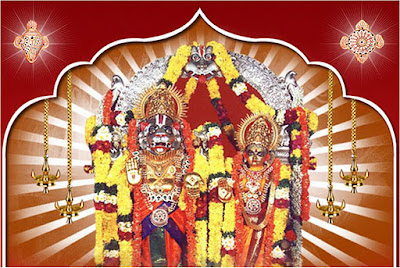
Om Sri Suryanarayana Swamy Vari Devasthanam Arasavalli - Srikakulam
Bull Temple in Karnataka
Architecture
Legend
Main Attraction
In Nov/Dec every year, when the groundnuts have been harvested, Kadalekayi Parishe (The Groundnut fair)is held near the temple. The first groundnuts are offered by the farmers to the sacred bull. Dodda Ganapati, a manificent image of the Lord, is enshrined adjacent to the Bull temple. It is believed that the source of the river Vishva Bharti originates at the feet of the statue.
Aadi Jyotirling Shree Somnath Mahadev
Somnath temple stands at the shore of the Arabian ocean on the western corner of Indian subcontinent in Gujarat State. This pilgrimage is one of the oldest and finds its reference in the ancient texts like Skandpuran, Shreemad Bhagavat, Shivpuran etc. The hymn from Rig-Veda quoted below mention the Bhagvan Someshwar along with the great pilgrimage like Gangaji, Yamunaji and Eastward Saraswati. This signifies the ancient value of this Tirthdham.
Somnath is in Prabhas Patan very near to Veraval.
The Moon God is said to have been relieved from the curse of his father-in-law Daksha Prajapati by the blessings of Bhagvan Somnath. In the Shiva Purana and Nandi Upapurana, Shiva said, `I am always present everywhere but specially in 12 forms and places as the jyotirlingas`. Somnath is one of these 12 holy places. This is the first among the twelve holy Shiva Jyotirlings.
The shore temple of Somnath is believed to have been built in 4 phases-in gold by Lord Soma, in silver by Ravi, in wood by lord Krishna and in stone by King Bhimadeva.
It has withstood the six-repeated desecration by the Muslim invaders. The very existence of this temple is symbol of reconstructive spirit and cultural unity of our society.
The seventh existing temple is built in the Kailas Mahameru Prasad style. The Iron man of India Sardar Shri Vallabhbhai Patel is the pioneer of the existing temple.
The temple is consisting of Garbhgruh, Sabhamandap and Nrityamandap with a 150 feet high Shikhar.
The Kalash at the top of the Shikhar weighs 10 tons and the Dhwajdand is 27 feet tall and 1 foot in circumference. The Abadhit Samudra Marg, Tirsthambh (Arrow) indicates the unobstructed sea route to the South Pole. The nearest land towards South Pole is about 9936 km. away. This is a wonderful indicator of the ancient Indian wisdom of geography and strategic location of the Jyotirling. The temple renovated by Maharani Ahalyabai is adjacent to the main temple complex.
Hari Har Tirthdham is here in Somnath. This is the holy place of Bhagvan Shri Krishna's Neejdham Prasthan Leela. The place where Bhagvan Shri Krishna was hit by an arrow of a poacher is known as Bhalka Tirtha. After being hit by the arrow, Bhagvan Shri Krishna arrived at the holy confluence of Hiran, Kapila and Saraswati and their Sangam with the ocean. He performed his divine Neejdham Prasthan Leela at the sacred and peaceful banks of river Hiran.
The Geetamandir is built here where the divine message of Shrimad Bhagavat Geeta is carved on eighteen marble pillars. Shri Lakshminarayan Mandir is close by. The Balramjiki Gufa is the place from where Bhagvan Shrikrishna's elder brother Balaramji took journey to his nijdham-patal.
Here is the Parshuram Tapobhumi, where Bhagvan Parshuramji carried out penance and he was relieved from the sin of Kshatriya killings. The Pandavas have said to have visited this place and taken holy bath in the Jalprabhas and built five Shiv temples.
The Somnath Trust has endeavored to develop the whole Shri Krishna Neejdham Prasthan Tirtha in an wholesome manner. The pilgrims please contribute generously to this noble cause.
Shree Somnath is first among the twelve Aadi Jyotirlings of India. It has a strategic location on the western coast of India.
Ancient Indian traditions maintain a close relationship of Somnath with release of Chandra (Moon God) from the curse of his father-in-law Daksha Prajapati. Moon was married to Twenty-Seven daughters of Daksha. However, he favoured Rohini and neglected other queens. The aggrieved Daksha cursed Moon and the Moon lost power of light. With the advice of Prajapita Brahma, Moon arrived at the Prabhas Teerth and worshipped Bhagvan Shiva. Pleased with the great penance and devotion of Moon, Bhagvan Shiva blessed him and relieved him from the curse of darkness. Pauranic traditions maintain that Moon had built a golden temple, followed by a silver temple by Ravana, Bhagvan Shree Krishna is believed to have built Somnath temple with Sandalwood.
The research based on ancient Indian classical texts show that first Somnath Jyotirling Pran-Pratistha was done on the auspicious third day of brighter half of Shravan month during the tenth Treta yug of Vaivswat Manvantar. Swami Shri Gajananand Saraswatiji, Chairman of Shrimad Aadhya Jagadguru Shankaracharya Vedic Shodh Sansthan, Varanasi suggested that the said first temple was built 7,99,25,105 years ago as derived from the traditions of Prabhas Khand of Skand Puran. Thus, this temple is a perennial source of inspiration for millions of Hindus since time immemorial.
The later sources of history account for several desecrations by Muslims invaders during eleventh to eighteen century A.D. The temple was rebuilt every time with the reconstructive spirit of the people. The modern temple was reconstructed with the resolve of Sardar Patel who visited the ruins of Somnath temple on November 13 1947. Then President of India, Dr. Rajendra Prasad, did the Pran-Pratistha at the existing temple on 11 May 1951.
Other spots in the temple are Shri Kapardi Vinayak and Shri Hanuman Temple in addition to Vallabhghat. Vallabhghat is a beautiful sunset point. The temple is illuminated every evening. Similarly, the Sound & Light Show “Jay Somnath” is also displayed every night during 8.00 to 9.00, which allows the pilgrims an ethereal experience in the backdrop of grand Somnath temple and the holy wave sounds of the Ocean. Ahalyabai temple is also close by, which was built by the queen mother Shri Ahalyabai Holker during 1782. This temple maintained the Pooja Parampara of Bhagvan Shiva during the hostile political conditions.
Dharbarenyeswarar Temple - Saneeswaran( Navagraha Temples)
History:
Adi Pooram festival for one day for Ambal in July-August.
Vinayaga Chathurthi festival for Vinayagar for one day in August-September.
Navarathri Kolu, Ambu festival in September-October.
Soorasamharam festival for seven days for Subramanyar in October-November.
Thiruvathirai festival for ten days in December-January.
Sivarathri festival for Chandrasekarar and Ambal in February March.
The Brahmortsavam festival in Vaikasi.
Sanipeyarchi festival for two days once in two and half years when “Sani” changes his gruha or place.
Apart from these festivals, Special Abhishegam are also held in the Temple throughout the year on important occassions.
Among the Navagrahas, Lord Saturn (Saneeswarar) occupies an important place.
Of the numerous tanks theertams, the Nala theertam is the important one. By bathing here, it is belived that one washes off all kinds of misfortune , afflictions and to escape from the woes of sani. Saniswara or Saturn, is generally known to affect one adversely on occasions when he occupies certain positions in one’s horoscope.A prayer to him, especially on Saturdays, is said to mitigate the hardships one will have to face during these periods. Saniswara is considered equally a bestower of all benefits to the devotees who pray sincerely to him. He is ruled by Lord Yama.
Mantra for Saturn – Aum aing hring shring shung shanaishcharaye namah aum
How To Reach Thirunallar Temple:
The Lord Sani (Saturn) transits from Kanni Rasi (Virgo) to Thulam Rasi (Libra) on Wednesday 21th December, 2011 and is going to remain there for the next two and half years.
Rasis/Signs affected by Sani Peyarchi
Thulam (Libra)
Kanni (Virgo)
Meenam (Pisces)
Vrischikam (Scorpio)
Kadagam (Cancer)
Mesham (Aries)
Those born in the above Rasis in particular and also all other rasis can offer Poojas to Lord Sani.
Offer your poojas at
1.Thirunallar,
2.Thirukollikadu(Pongu sani),
3.Thirunaraiyur(Mangala Sani) &
4.kuchanar
Pooja Type
1.Archana - Rs.350 per temple
2.Sahasranamam Archana - Rs.500 temple
3.Pal Abishekam - Rs.700 per temple
4.Paripurana Abishekam - Rs.1200 per temple
5.sani peyarchi parihara Homam - Rs.6000
6.Exclusive sani peyarchi Homam sangalapam per person - Rs.350
To offer your pooja kindly enter the details in the link below
http://sanipeyarchi.in/contact-us/
Payments options
For NEFT & Cash Deposits
After depositing the cash please mail us ,so that we can check and confirm the same from our end.
State Bank of India:
Account Number : 30131994421
Account Name : Ganesh RamanG S
Branch : Kumbakonam Bazzar
Branch: Kumbakonam
Bank : State Bank Of India
IFSC Code: SBIN0007852
ICICI:
Current Account Number : 000101563895
Account Name : Senthil S
Branch Name : Cenotaph Road Chennai
Bank Name : ICICI Bank
SWIFT Code: ICIC IN BB 001
IFSC Code : ICIC0000001
State Bank of Mysore:
Account Number 64013627395
Account Name Ganesh Raman G S
Branch : DR Ambedkar Veedhi Bangalore
Bank : State Bank Of Mysore
swift code : SBMYINBB022
IFSC Code: SBMY0040022
For online Payments (Credit/Debit cards)
Paypal
http://sanipeyarchi.in/products-page/
Dandayudhapani Swami Temple Palani
Legend
Lord Ganesha, who believed that his parents were his world, simply circumbulated Lord Shiva and Goddess Shakti and claimed the mango fruit. Lord Subrahmanya returned to Mount Kailash, only to find that Lord Ganesha had already won the contest.
Lord Murugan felt he had been deceived and decided to leave Mount Kailasam. He reached to top of what is today called Pazhani malai (the Hill of Pazhani) and set up his abode there.Goddess Shakti and Lord Shiva rushed to the hill and tried to pacify their son, calling him, Gnana Pazham Nee appa (in Tamil, “you are the fruit – Pazham; of wisdom – Gnana”). Hence this place came to be called Pazhani, or Palani.
Legend also has it that a divine siddhar named Boghar, created the idol of Dhandayuthapaani using navapashanam, an amalgam made from 9 poisonous elements which on getting mixed develops highly curative powers for many ailments of the human body, according to Sidhha Medicine practice. A small portion with a deity, dedicated to Boghar is also placed inside the temple. the adjoining walls depicts the history of the creation and other facts related to the temple.
Darshan (meaning open to the public) hours are from 6.00 a.m. to 8.00 p.m.
On festival days the temple opens at 4.30 a.m.
Vilaa Pooja (6.30 a.m.)
Siru Kall Pooja (8.00 a.m.)
Kaala Santhi (9.00 a.m.)
Utchikkala Pooja (12.00 noon)
Raja Alankaram (5.30 p.m.)
Iraakkaala Puja (8.00 p.m.)
Golden Car Darshan (6.30 p.m.)
further information please contact:
The Joint Commissioner/Executive Officer
Arulmigu Dandayudhapani Swami Devasthanam Office
Adivaram Palani - 624 601 India
Tel. (91) 04545-41417 or 42236
Fax: (91) 04545-41417
E-mail: lordmuruga@eth.net
Swamimalai Sri Swaminatha Swami Temple
About Temple:
along with s tatues of several other gods and goddesses including Karthaveeryarjuna, Idumban and subramanya swamy. As we approach the sanctum sanctorum, we pass across worshipping Sabhabathi, Senapathi, Shanmuka with Valli and Devasena – all being various manifestations of Lord Kumara or Karthikeya.
There are five Theerthams or divine water sources, in and around the temple. They are: Vajra Theertham, Saravana Theertham Netra Pushkarini( well)and Kumaratturai (Kaveri) Legend has it that a blind devotee by name Sumathi lost his eyesight because of his sins. Sage Bharatwaja asked him to go and worship Netra vinayaga and take a dip in the Netra teertham to get over his sins and regain his sight. It is believed that the devotee took a dip in the sacred waters and regained his sight as he approached the Netera Vinayagar temple.
Legends – Puranas and Mythology Nakeerar, in his Tamil
writings compilation called Thirumurugatruppadai, more than 2000 years ago, and
saint Poet Arunagirinaathar, who has composed 95 verses on Murugan, have both sung in great praise of Lord of Swamimalai.Literary references to the place are also available in many other ancient tamil scriptures and inscriptions. It is believed that Lord Muruga teached the significfance of Pranava Mantra (the sacred OM) to Lord Shiva – his father – here and hence the name Swami malai for the place and Thagappan swami for the Lord. This temple is of great spiritual importance to the devotees of Lord Skanda – also known as Kanda and Arumuga – as
he became a guru to his own father who is considered as the Lord of the universe. It is worshipped by thousands of devotees throughout the year. Location and Temple Precincts - The battle of Lord Muruga with Soorapadman is enacted to the fervor of the Muruga Bakthas in the Tamil month of Masi at Tiruchendur ending with the marriage of Lord Murugan with Deivayanai (Devanai).
The History
Swamimalai is one of the very ancient temples of Tamil Nadu. One can see that it is mentioned in Thirumurukaatrup-padai of Nakeerar, compiled under ‘paththuppaattu’ (Ten verses) of Sangam period, which belongs to second century B.C. The shrine therefore is evidently older than 2400 years. It is believed to have been constructed by Parantaka Chola I. But recent history and documentation show that the temple was damaged to a great extent and the gopurams were demolished during the Anglo-French war of 1740 A.D.
The temple of Swaminatha is built on the hillock. At the foot of the hillock, there is a temple for Lord Shiva, who played the ‘Taught’. His temple is situated at a lower plane to indicate the superiority of the ‘Master.’ Lord Shiva is known as Sundaresa and His Consort, Meenakshi.
There are three beautiful gopurams on all three sides - east, west and north. On the south is situated the massive and main gopuram, known as the Rajagopuram. There are three prakarams in the temple. There is a shrine for Vinayaka, who is known by the name Netra Vinayaka. It is said that a blind man had his vision restored, after he worshipped Vinayaka here and from then on, Ganesa is known as Netra Vinayaka in Swamimalai.
There are other shrines in the prakaram for Agastya, Visalakshi, Lakshmi, Saraswathi and other deities. There is a shrine for Lord Muruga in a corner, where He resides with His consort, Devayani. This is the only shrine where Subrahmanya is seen with Devayani alone, without the other Consort, Valli. Moreover, the usual divine vehicle, peacock is absent in this shrine. Instead, there is a white elephant is found in front of the Lord. It is said that Indra, in gratitude for having saved him from Asuras, presented the Lord with his own vehicle, Airavatam, the white elephant and hence the peacock is absent in Swamimalai.
Krittika is an important day for a visit to the shrine. The main festivals are Brahma Utsavam, Skanda Shasti and the festival of His marriage with Valli. Vibuthi Abhishekam - smearing of the deity with holy ashes - is a special feature in Swamimalai, as it is in Palani.
The temple is very important from the literary, historic and also devotional points of view.
Pujas and Festivals
Daily pujas to the deities are performed six times a day (six kalams). Usha Kalam, Kalasandhi and Uchikala poojas are performed in the forenoon and the afternoon poojas commencing from Sayaratchai and Rendam kalam are concluded with Arthajama pooja in the night.
The important festivals conducted in the temple are:
Monthly Kirutikai festival;
Temple Car festival in April;
Visakam festival in May;
Navaratri festival in May;
Skanda Shashti festival in October;
Tiru Karthikai festival in Nov/December;
Taippūcam festival in January; and
Pankuni Uttiram festival in March
Om Sri Suryanarayana Swamy Vari Devasthanam Arasavalli Srikakulam
HEAVENLY LIGHT
Search for Light and Truth has been the guiding principle of Vedic Seers of hoary antiquity in their earnest endeavors to solve the eternal problems of creation. “Jyotiranveshayamaha” - ‘Let us search for Light, heavenly Light’ was their motto. It is interesting to note that the Royal Astronomical Society of Britain has the same motto, “quick quid nitil notundum” - means, “whatever shines must be observed”. A Russian sentence goes on, “Rays of light are the emissaries of their master, the source of light, the Sun.
Devotees of every age testify to the appearance of God as light. And throughout the world, Light is considered the symbol for all splendor and glory of the Spirit. It stands for Truth, Order, Reality, Goodness, Beauty, Intelligence, Wisdom, Bliss and Immortality or “Amritattwa”. Therefore, the Sun is Light and Life, Love and Law. “Let there be Light! And there was Light”, the Bible saith. The soul of the universe or “Hiranya Garbha” sustains and upholds the entire universe; all animate and inanimate beings live through the Sun
The Supreme Cosmic Consciousness manifesting through the Divine Showered of light and life has been fully realized by the ancient bards and savants of the East and the West. They propounded the theory of the Sun worship in many ways, among all to be within everybody’s reach. Thus, the worship of the Sun in daily life came into Life and Existence ages ago but became part and parcel of our being even today. May Surya showers Life Force on one and all-from Eskimo to Negro! May the humanity see Him everyday!
Once Lord Devendra , Ignoring the words of Dwarapalaka Nandi , attempted to force his entry for Darshan of Sri Rudrakoteswara Swamy varu at an untimely hour when Lord siva was along with his consort . The Dwarapalaka Nandi in the discharge of his duties kicked the intruder . Thus kicked and injured by the Devine attendent Indra fell down senceless . And in his unconscious state Indra dreamt that he would be relieved of his pain of injury in his chest caused by Nandi if he built a temple and installed an Idol of the Sun God . After regaining his consciousness , he remembered what he dreamt.
Following his dream he pickedup handfulls of earth three times at a place where he lay ,and there he found this beautiful idol of sun God with his three consorts Usha , Chaya and Padmini . At the base of the idols are the figures of Mathara and Pingala the Dwarapalakas and high up are the two divine saints , sanaka and sanadana holding 'Chatrams'(An Umbrella ). The Sun God is depicted as riding over a chariot drawn by Anura, the Radhasaradhy . All these figures are exquisitely carved out of a single black finely polished grenite stone.
Ashtottara seva 20.00
Sahasra Namarchana 30.00
Ksheeranna Bhogam 50.00
Ksheerabhisheka Seva 216.00
Tiruveedhi Seva 500.00
Kalyana Seva 500.00
Surya Namaskarms 50.00
Surya Namaskarams
This Seva performs Every Sunday Morning 06.00 AM to 12.00 PM
Tiruveedhi Seva
This Seva performs Every Sunday Evening 06.00 PM
Ksheeranna Bhogam
This Seva performs Every Sunday afternoon 03.00 PM
Ashtottara seva 300.00
Sahasra Namarchana 400.00
Ksheeranna Bhogam 600.00
Ksheerabhisheka Seva 2500.00
Tiruveedhi Seva 5000.00
Kalyana Seva 5000.00
Surya Namaskarms 600.00
Devasthanam Bank Account Details given below
To perform Sevas by Sending in an International money order / Demand Draft / thru Cheques for requisite amount, drawn on any nationalised bank, in favour of the Executive Officer, Sri Suryanarayana Swamy Devasthanam, Srikakulam payable at Srikakulam Branch, Andhra Pradesh. You can send your request and IMO / DD to :-
EXECUTIVE OFFICER
SRI SURYANARAYANA SWAMY VARI DEVASTHANAM
ARASAVALLI - 532 401
SRIKAKULAM
ANDHRA PRADESH
INDIA
Donations
If you would like to donate towards devasthanam, you can send your donations through International Money Order/ Demand Draft favouring the Executive Officer, Sri Suryanarayana swamy vari Devasthanam, Arasavalli and payable at Srikakulam branch. The International Money order / Demand draft can be sent to
EXECUTIVE OFFICER
SRI SURYANARAYANA SWAMY VARI DEVASTHANAM
ARASAVALLI - 532 401
SRIKAKULAM
ANDHRA PRADESH
INDIA
Outside India or Within India ( Online Transfer )
The money can transfer or deposit into Devasthanam Bank Account no which is mentioned below thru any Money Exchange services or online money Transfer.
Holder Name Sri Suryanarayana Swamy Devasthanam, Arasavalli - Srikakulam.
Bank State Bank of India
Payable Branch Srikakulam
Account No 11152303078
Sri Swayambu Varasidhi Vinayakaswamy Vari Devasthanam Kanipakam
Vinayaka SwamySHRINE IN WATER
Kanipakam is a small village on the bank of Bahuda River.
"Kani" means wetland and "Pakam" means flow of water into wetland. According to the legend of the temple there were three brothers and each one had a handicap. Viz., Dumb, Deaf and Blind. They were earning out their livelihood by cultivating a small piece of land.
In olden days water was drawn from the well by way of 'Piccota System'. As one of them used to irrigate the field through the channels, the other two used to ply on the Piccota. On one such operation they found that the water in the well got dried up and they could no longer continue their job. One of them got into the well and started digging it up. He was taken aback to see the iron implement hitting a stone like formation.
Later, he was shocked to see blood oozing out from it. Within in a few seconds the entire water in the well, turned blood red in colour. Thus, startled by this divine sight, all the three became normal getting rid of their deformities. As soon as the villagers came to know about this miracle, they thronged to the well and tried to deepen the well further. But their attempt proved futile because the 'swayambhu' idol (the self-manifested) of Lord Vinayaka emerged from the swirling waters.
Ultimately they offered many number of coconuts with all prayers- modesty kneeling before the new idol afford “MAGALHARATHI” etc. They declared the ideal of “SWAYAMBHU” and tendered number of coconuts. The coconuts water flowed into the channel to a distance of more than one and a quarter acres. The indication of this led to the modification in the usage of the Tamil word “KANIPARAKAM” and later pronounced as KANIPAKAM. Even today the idol is in the original well and the springs of the well are perennial and the eternal. During the rainy season, the holy water from the well overflows even today.
Another striking and strange feature of the idol is that it is still growing in size. At present, we can see the knees and the abdomen of the idol. Smt. Lakshmamma, an ardent devotee had offered a 'Kavacham' (Armour) to the Lord, fifty years ago but today it is out of size and doesn't fit the idol. The holy water from the well is offered to the devotees as theertham.
The legend behind Bahuda River
Long ago there lived two brothers Sankha and Likhita. They were on a pilgrimage to Kanipakam. As the journey was tiring, the younger brother Likhita felt hungry. Disregarding the advice of the elder brother he plucked a mango from the mango grove. Sankha felt bad and reported this to the ruler of that area and pleaded for punishment for the sin committed during the pilgrimage. Thus Likhita was punished severely being deprived of both arms.
Later they took bath in the river near Kanipakam temple. Lo Behold! The chopped arms were restored to Likhita as soon as he had a dip in the sacred waters of the river. These incidents lead the ruler to rename the river as 'Bahuda' (Bahu means human arm). Thus the river beside Kanipakam temple is now known as 'Bahuda River'.
Suprabatham, Binduteerthaabishekham (4.00 A.M to 5.00 A.M): Rs.551/- 2 persons allowed. Devotees will be given 5 laddus, ½ Kg of pulihora, 1 shesha vastram, 1 blouse piece, 1 silver dollar.
Result:This Seva is for awaking the swamy, its pleasure to have the first Darshan of Swamiji. This can be experienced only by having first Darshan at early Morning.
Paalabhishekam(7.30 A.M to 8.00 A.M ,12.30 P.M to 1.00 P.M, 2.00PM to 2.30PM , 3.30PM to 4.00 PM and 5.45PM to 6.15 PM):Rs. 150/- 1 or 2 persons allowed. Devotees should get minimum of 2 litres of milk.
SankataHaraGanapati Vratham(9.00 A.M to 12.00 Noon): Rs. 151/- 1 or 2persons are allowed. Devotees will be given 2 laddus.
Result: In Ganeshaporanam, this vratham has prominent role. This vratham was performed by Lord Krishna and Bramha. This Vratham can be performed by the couple those who don’t have children, for Business Development, for overcoming all the frustrations and especially for Court Case Salvations.
Special Abhishekam(5.30AM to 6.00AM, 9.00A.M to 10.00A.M , 11.00A.M to 12.00 noon,1.00PM to2.00PM and 6.15PM to 7.15PM): Rs. 500/- 2 persons allowed in the first instance along with children and 3 persons will be allowed later. Devasthanam will supply Pooja samagri.
Pavalimpu Seva (EkanthaSeva) (9.30 P.M to 10.00 PM): Rs.150/- 2 persons allowed, Devotees should get the pooja samagri.
Result: Sri Ganapathi and Ammavaru will be rested in Addala Mandapam in the temple. The newly married couples, couples to have the children, the couples with problems in married life can perform this seva and can get the problems solved.
Nithya Kalyanotshavam:(11.00 AM to 12.00 PM): Rs.616/-, 1 person or couple will be allowed per ticket. The devotees will be given shesha vastram, 1 blouse piece, 2 laddus and 2 vadas.
Result: The persons who are having KujaDosham (Objections for their Marriage) can get their problems by performing this seva.
Vunjala Seva:(6.30 PM to 7.30 PM): Rs.250/-, 1 person or couple will be allowed per ticket. The devotees will be given 1 seshavastram, 1 blouse piece, 2 laddus and 2 vadas.
Result:They devotees will be having chance to keep the lord on their Shoulders and can go round the Temple and they send the lord to Sleep by swinging in the Cradle.
Darshans & Poojas
Special Entrance Darshan: Rs. 10/- per head.
Ordinary queue line: Free
Nijaroopa Darshan
(Morning 5.00 to 5.30,7.00 to 7.30,8.30 to 9.00,10.30 to 11.00 and Evening 4.30 to 5.00): Rs. 50/- per head.
Ganapathi Homam(9.00AM to 12.00 Noon): Rs. 500/- the Devasthanam will supply Pooja samagri.
Result:In Day to day life there is lot of competition and Objections for all the works, in the same way lot of frustrations in Education, Employment, marriage and Business. By Performing this Homam, One can overcome such Frustrations.
Ganapathi Modaka Pooja (Before 12.00 Noon): Rs. 300/- Devasthanam will supply Pooja samagri.
Result: From the past History, we all know that Lord Vinayaka is Very Fond of Kudumulu; all the Hindus celebrate the Occasions by giving the Kudumulu as Food to Lord Vigneswara.
Ganapathi Sahasra Namarchana (10.00 A.M to 11.00 Noon , 1.00 P.M to 1.30 P.M , 3.30 P.M to 4.00 P.M & 6.00 P.M to 6.30 P.M): Rs. 150/- Devasthanam will supply Pooja samagri.
Ganapathi Patra Pooja(Before 12.00 Noon): Rs. 58/- Devasthanam will supply Pooja samagri.
Shodasa Ganapathi Pooja(Before 12.00 Noon): Rs. 500/- Devasthanam will supply Pooja samagri.
Result: There are 32 Avatarams of Ganapathi. This pooja will be performed by using 16 of those 32 Avatarams. They will give the prasadams to devotees’ by performing archana to all the 16 Avatarams. Actually we get more peace and happiness by performing archana to one avataram. The result of performing archana to 16 avatarams can be unbelievable.
Moola Mantraarchana(Before 12.00 Noon): Rs. 300/- 1 person or couple allowed . It’s performed before 12 in the morning.
Result: Ganapathi was Very Fond of Coconuts, this seva can be performed by giving 8 Coconuts to ganapathi. By this one can get blessings from Ganapathi and all the problems will be solved, they can live peacefully.
Polangi Seva(Every Thursday): Rs. 1000/- per family. Every Thursday.
Result: Sri Ganapathi is decorated by different colour flowers in his Garbalayam and Antralayam. By performing this Seva one can get more wealth through Lakshmi Blessings.
Vahana Pooja: Rs. 50/- (Auto & Scooter), Rs. 125/- (Car, Jeep), Rs. 150/- (Other Four wheelers)
Tala Neelalu: Rs. 5/- per head. Done near Swami vari Kalyana Katta.
Pramanam: Rs. 516/- per each Pramanam.Everyday at 5 Pm
Navagraha Harathi:Rs. 2/-
Navagraha Archana: Rs. 5/-
Navagraha Tiela Abhishekam: Rs. 116/-
Sani Dosha Nivarana Jyothi: Rs. 5/-.
Navagraha Santhi: Rs. 116/-
Sri Veera Anjaneya Swamy Archana: Rs. 5/-
Sri Veera Anjaneya Swamy Harathi: Rs. 2/-
Sri SitaRama Kalyanam: Rs. 500/-
Sri Veera Anjaneya Swamy Vadamala Pooja: Rs. 100/-
Result: By this, the people who are having ‘Navagraha Dosam’ they can overcome the Dosam. The children’s who are having the problems in future can be eradicated by this Seva.
Akshrabyasam, Anna Prasana: Rs. 116/- 2 laddus & 1 Brass dollar will be given. Ticket should be taken before 12pm.
Namakaranam (Naming Ceremony): Rs. 116/- & 1 Brass dollar will be given.
Subhakaryamula Aahvana Poojalu: Rs. 51/-
Uthsava Murthy Harathi: Rs. 2/-
Uthsava Murthy Archana:Rs. 5/-
MahaHarati (Kumba Harati): 6.00 P.M to 6.15 P.M daily
Rs.25/-, one person will be allowed, 1 Laddu will be given as Prasadam.
Saswatha Ganapathi Homam: Rs. 2500/- (Once in a year on a particular day. Date choosen by the devotee).
Saswatha Pooja: Rs. 516/- (Once in a year on a particular day. Date choosen by the devotee).
For Nitya Annadanam Rs. 1116/- is the minimum.
Money should be sent through Bank Drafts, Money orders, or personally
To,
Executive officer (EO)
Sri VaraSidhi Vinayaka Swami Vari Devasthanam,
Kanipakam.
NOTE:
1: Special Pooja will be performed once in a year and prasadam will be sent to the devotees by post i.e., vibhoodi.
2: Nitya Annadanam started from 1991 onwards. Daily afternoon 150 members are provided free meals. Tickets will be issued near the place annadanam takes place. There is a reduction in the tax for those who give donations to annadanam scheme.
3.Donations for development activities, Golden Chariot, Nityaannadanam
are exempted from the income tax under 80(G).
Sri Lakshmi Narasimha Swamy Vari Devastanam
Temple History
Sri Maha Vishnu Came from out of the pillar as per the desire of Bhakta Prahladha and killed Hiranya Kashyapa,who is father of Prahladha,who is beloved devotee of Maha Vishnu.
In Ancient days Sri Yada Maharshi son of Sri Rushyashrunga Maharshi with the Blessings of Anjaneya Swamy had performed great penance for Lord Narasimha Swamy. After securing blessing for his penance Lord Narasimha had come into existence in Five Avatharas called as Sri Jwala Narasimha, Sri Yogananda Narasimha, Sri Ugra Narasimha, Sri Gandaberunda Narasimha, Sri Lakshmi Narasimha. As such this is known as “Pancha Narasimha Kshetram”. The devotees who worship this deity with devotion, the problems faced by them in regarding their “Graha”, the difficulties through evil spirits and their all mental problems are being cured by the God & Godess. All the difficulties faced by the devotees are being cured through herbal medicines like fruits, flowers and Tulasi Teertham. The devotees who believe the Lord. He is appearing to them in their dreams and conducting operations also.
Yadagirigutta is a census town in Nalgonda district in the Indian state of Andhra Pradesh.
In Tretayugam, there lived a sage by the name of Yadarishi, son of the great sage Rishyasrunga and Santa Devi who did penance inside a cave with the blessings of Anjaneya (Hanuman) on this hill between Bhongir (Bhuvanagiri) and Raigiri (Now in Nalgonda district of Andhra Pradesh, India). Pleased with his deep devotion, Lord Narasimha, an incarnation of Lord Vishnu appeared before him in five different forms as Jwala, Yogananda, Gandabherunda, Ugra and Lakshminarasimha. They later manifested themselves into finely sculpted forms that later came to be worshiped as Pancha Narasimha Kshetram.
There are Purana and traditional accounts of this Shrine, which are widely popular among the devotees. There is mention about the origin of this temple in the Skanda Purana, one of the famous 18 puranasAnother Legend also has it that Sriman Narayana, pleased with YadaRushi penance, sent Sri Anjaneya to direct the rishi to a holy spot, where the Lord appeared to him in the form of Sri LakshmiNarasimha. This spot is marked by a temple located at the foot of the Yadagiri hillock, and is located about 500 meters from the present temple. There the sage worshiped the Lord for many years.
After Yadarishi attained moksha, a number of tribals, Knowing of the Lord’s presence, came to worship Him at this temple. But, not being very learned, these devotees began to engage in improper worship. Because of this, Sri LakshmiNarasimha moved into to the hills. The tribals searched for many years to find their Lord, to no avail.
After many years had passed, the Lord appeared in the dream of a devout lady among the tribe, directing her to a large cavern wherein He revealed Himself to all as five majestic Avatars.The Aradhanam and Puja in this temple are performed according to Pancharatra Agamam. The puja vidhanam (Worship procedure) was set by Late Sri Vangeepuram Narasimhacharyulu who composed Yadagiri Suprabhatam, Prapatti, Stotram, Mangalashasanam and served as Sthanacharya of this temple.
Sevas Ticket Price
Sri Swamivaari kalyanostavam (once) 1016-00
Sri Swamivaari okka roju Brahmostavam 2001-00
Sri swamivari moodu rojula Brahmostavam 2516-00
Sri swamivari aidhu rojula Brahmostavam 3516-00
Sri swamivari oonjhal seva 316-00
Sri swamivari vendi jodu seva 316-00
Sri swamivari nizaabhishekam( okkasari maathrame) For CouplesSri swamivari nizaabhishekam( okkasari maathrame) 500-00 250-00
Andal ammavaari kumkumaarchana 8AM to 9AM4PM to 5PM (pravesamu iddariki maathrame) 100-00
Sri swamivaari archana( pravesamu okkariki maathrame) 216-00
Aanjaneya swamivaari aaku pooja prathi Magalavaramu(pravesamu iddariki maathrame) 216-00
Anna praasana ( swamivaari aaragimpu samyamulo ticket mundugaa pondavalenu) 216-00
Sri swamivaari lakshatulasi archana/ amma vaariki laksha kumkumaarchana/ pushapaarchana) 756-00
Sri swamivaari sathaghatabhishekam( swamivaari nakshatram rojuna) 516-00
Sivalayamlo laksha bilvaarchana (okkasariki) 250-00
Ashtotaram 51-00
Seeghra darshanamAthi Sheegra Darshnam (With Two Laddus )V.I.P Darshanam Saturday & Sundays (with Two Laddus) 25-00 100-00 150-00
Sri aandalammavaari abhishekamu prathi sukravaram (pravesamu okkariki maatrame) 216-00
Ganda deepam mariyu mokku tenkaya 51-00
Akshara sweekaram 25-00
Every year Sri Swamy vari Brahmothsavams are being performed during the months of Palgunam i.e. from Shudha Vidiya to Dwadasi for (11 ) days (normally in Febrauary & March).
During the Brahmothsavams cultural programs like Harikathas, Bajans, Vocal recites, Upanyasams, Bharatha Natyams and Dramas will be arranged with the well known artists and Scholars from the different places.
The programs Will also be arranged at the time of Narasimha Jayanthi(which comes in the Month of Vaishakha). Shudha Chathurdashi. i.e May Various Parayanams like Nalayana prabhandhams, parushams Ramayan, Maha Bharath , Bhagawath Geetha, Kshetra Mahathyam, etc Will be arranged at the time of Brahmothsavams and Jayanthi. The Peethadhipathis & Mathadhipathis who visits this temple will also given their Pravachanams to the Devotees.
Annual Brahmothsavams from Shudha Vidiya to Dwadasi for (11 ) days(normally in Febrauary & March).
Sri Narasimha Jayanthi Vysakha Sudha Dwadasgu to Chathurdashi
- Vykunta Ekadashi & Adhyayanothsavams
- Pavithrothsavams
- Ramanuja Thirunakshathram
- Nammalvar Thirunakshathram
- Manavala Mahammavari
- Thirunakshatram Thirumanjari alwar Thirunakshatram
- Thiruppavari alwar Thirunakshatram
- Andal Thirunakshatram
- Sri Krishna Janmastami
- Margali Masam
- Sri Rama Navami
- Maha Shiva Rathri
- Devi Navarathrulu
- Hanumath Jayanthi
- Annakutothsavam
Swathi :Sri Swamy vari Astothara Satha Ghatabhisekam will be performs every month on Swathi Nakshatram (i.e Birth star of Swamy varu) at 4-30 AM to 6-30 AM as per Agama Shastra procedure. Devotees may Participate in this Sathaghatabhisekham @ 516/- (Two persones allowed).
Jayanthi:Sri Swamy vari Jayanthi Mahotsavams will be perform from Vysakha Sudha Dwadasgu to Chathurdashi.
Pavithrostavams :Sri Swamy vari Pavithrotsavams will performs from Shravana Shudha Dashimi to Dwadashi.
Adhyanotsavams :Sri Swamy vari Adhyayanotsavams will perform Marga Shira Dashimi to Pournami.
Dhanurmasams :During the Dhanurmasam days, every day at early morning Margali will be held in the Temple and Thiruppavai Keerthanams will be rendered by Archakas which were written by Andal Ammavaru.
Visiting HoursTemple is opening at 4.00 a.m. early morning and it will be closed by 9.30 p.m. In peak days like Sunday/Saturday /Festival Days the temple would be opened one hour earlier than the schedule time
Darshanam Timings : Morning
04-30 am to 5-00 am Binde teertam
05-00 am to 5-30 am Bala Bogam
05-30 am to 6-30 am Nijabhishekam
06-30 am to 7-15 am Archana
7-15 am to 11-30 am Darshnamas (All)
11-30 am to 12-30 am Maharaja Bogamu
12-30 am to 3-00-pm Darshanams
03-00 pm to 04-00 pm Dwarabandanamu
Darshanam Timings : Evening
04-00 pm to 5-00 pm Special Darshnams
05-00 pm to 7-00 pm Darshanams (All)
07-00 pm to 7-30pm Aaradhana
7-30 pm to 8-15 pm Archana
8-15 pm to 9 -00 pm Darshnamas (All)
9-00 pm to 9-30 pm Maha nivedhana
9-30 pm to 9-45 pm Shayanostavams
9-45 pm Temple close
Kalyanamu : 08-00 am to 11-00 am
Athi sheegra Darshnam : will be allowed from 07-15 am to 07-00 pm And from 08-15 pm to 09-00pm by collecting fees at Rs 100/- with (2) laddu prasadam.
V .I.p Darshan on peak day is arranged at Rs-150/- with two laddu prasadams
The following are the argita sevas
Nijabishekam Rs 500.00 from 5.30 am to 6.30 am. . Couple
Sahasra Namarchana Rs 216.00 from 6.30 am to 7.15 am. Each one
Kunkumarchana Rs 100.00 from 8.30 am to 9.00 am. Each one(at Yaga Shala)
Kalyanothsavam Rs 1016.00 from 10.00am to 12.00pm Five Members
Jodu Seva Rs 316.00 from 6.00 pm to 6.45pm. Two members
Pavalimpu Seva Rs 51.00 from 9.00 pm to 9.30pm.
01 Sri Swamy vari Saswatha Brahmothsavam 10,116/-
02 Sri Swamy vari Saswatha Kalyanam 6,000/-
03 Sri Swamy vari Saswatha SahasranamaArchana 1,116/-
04 Sri Andal Ammavari Saswatha Nijabhishekam 1,116/-
05 Sri Swamy vari Saswatha Nijabhishekam 1,116/-
06 Sri Swamy vari Nitya prasada Vitharana 1,116/-
07 Sri Anjaneya Swamy Aku Pooja 2,000/-
08 Sri Swamy vari Nitya Nijabhishekam 10,116/-
09 Sri Swamy vari Saswatha Nitya SahasranamaArchana 10,116/-
10 Sri Andal Ammavari Saswatha Nitya Archana 10,116/-
11 Sri Andal Ammavari Saswatha Nijabhishekam 10,116/-
12 Sri Anjaneya Swamy vari Shaswatha Archana 10,116/-
13 Sri Swamy vari Annadhanam 1,116/-
1) Dwaja Stambam 10 kg Gold
2)Dwaja Sthabha peetam– 15 K g Gold with Copper sheet Kg 150-000grams
3) Balipeetam —- 9 kg Gold with Copper sheet Kg 90-000grams
Contact Number:
- Executive Officer / Fax 08685 – 236755
- Administration Office 08685 - 236645
- Reception Office 08685 – 236623
- Tolegate 08685 – 236620
- Yogananda Nilayam 08685 - 236664
- Temple 08685 - 236622
- Reception Office : 08685 - 236623
- Administration Office : 08685 - 236645
- Executive Officer / Fax : 08685 - 236755
- Tolegate : 08685 - 236620
- Yogananda Nilayam : 08685 - 236664
- Temple : 08685 - 236622
Sree Venkateswara Swamy Birla Temple Hyderabad
Birla Temple Full PhotoThe Birla Foundation has constructed several similar temples in India, all of which are known as Birla Mandir.
The temple manifests a blend of South Indian Rajasthani and Utkala temple architectures. In its entirety, it is made of 2000 tons of pure Rajasthani white marble.
The granite of the presiding deity is about 11 ft (3.4 m) tall and a carved lotus forms an umbrella on the roof. The consorts of Lord Venkateswara, Padmavati and Andal are housed in separate shrines. There is a brass flagstaff in the temple premises which rises to a height of 42 ft (13 m).
Transport
Sripuram Golden Mahalaxmi Temple Vellore

Sudarsanchakra Rainbow
Sripuram Golden Mahalaxmi Temple,Thirumalaikodi,Near Vellore,TamilnaduHistory
Golden Temple - when uttered this word, immediately people thinks of Amritsar and the Highest Body of the Sikh's pride Golden Temple. But now it has got a good competition! Yes, an estimated over 600 Crores of Indian Rupees spent, to construct a true Golden Temple for Goddess Mahalakshmi, the presiding deity, (installed and maintained by Sri Narayani Peedam) in this Temple at Sripuram, which is situated 6 km away from the District Headquarters - Vellore, North Arcot District in Tamilnadu. Now, the temple is complete, open to the general public; this town Sripuram has all the facilities one can visit to enjoy his/her spiritual experience.
A Mahalakshmi temple called 'Sripuram' and made of more than a ton of pure gold will glitter and gleam under the sun on August 24 when it is unveiled for consecration by the Sri Narayani Peetam headed by a 31-year-old god man who calls himself Narayani Amma. Devotees hail the temple as 'one of the wonders of the world' and say that it is the only temple covered fully with gold.
More than 400 gold and coppersmiths from the Tirupathi Thirumala Devasthanam are said to have worked for six years to craft the Rs. 600-crore golden temple located on 55,000 sq ft of land on a 100-acre salubrious stretch in Malaikodi, about 6 km from Vellore in north Tamil Nadu. According to official sources, the gold bars were purchased through RBI in "a transparent manner "
First the coppersmiths set to work creating a copper base on the temple structure with engravings and etchings before the gold, beaten into nine layers of foils, was draped around it. The sanctum sanctorum will hold the deity of Mahalakshmi made of stone granite, but covered with gold protection layers. (Kavacham - adornments).
" The Sripuram or Spiritual Park is Amma's dedication to the world and mankind," said P Murali, a trustee of the Peetam, adding that the temple has more gold than the Golden Temple of Amritsar.
Messages by 'Amma' have been laid out along the path to the temple with messages from the Gita, Bible and Quran. "When one enters the Sripuram, their focus is just on the magnificent temple. But when they leave, they cannot do so without taking some messages and gaining some wisdom," according to a booklet detailing the 'services' rendered by the Peetam. "In this quagmire of materialism, Sripuram rises as an inspiration to man to find the divinity within him," adds a Narayani Peedam brochure.
The arrangements were being made to hire personnel to throw a security cover around the temple. "But the gold sheets have been laid out in such a manner that it would cost more to rip it off than purchase the gold," said a top Vellore district official.
How to reach Sripuram Golden Mahalakshmi Temple? Location, Distance, Route & contact details: ( Katpadi Longitude 79 Deg. 8' East, Latitude 12 Deg. North 59' )
Whatsoever may the cause, the Temple location, its surroundings and the peaceful atmosphere are the added attractions for the visitors and it is sure worth to visit this place once. The Maha Laksmi Temple is now an attraction even for the tourists and pilgrimage. This temple is located at Thirumalaikodi; Katpadi is the nearest Railway station in the Chennai-Bangalore route of Southern Railway. How to reach Sripuram? It takes about 3 and half hours drive from Chennai, in the Chennai - Bangalore road. It is in the National Highways NH46 that connects Chennai - Bangalore (Bangaluru) and in NH4 from Ranipet to Bangalore. From Katpadi, one can reach by state owned bus to Sripuram which takes about 15 minutes drive or less. Or, one can reach Thirumalaikodi by bus from Vellore to Anicut / Odugathur route. The State run buses ply via Thirumalaikodi in this route. From Tirupati (Tirupathi) to Katpadi, there are shuttle train services available upto Katpadi or Jolarpettai (Jolarpet Passenger) or one can travel by train from Tirupathi (Tirupati) by Kanyakumari Express from Tirupati to Katpadi which takes less than 3 hours journey. Direct bus services available from all major points to Vellore from Chennai, Chittoor, Bangalore, Kanchipuram, Kanyakumari, Tirupathi & Thiruvannamalai - all being major Temple towns and picnic spots. Vellore is well connected by road with all the southern states viz. Andhra Pradesh, Karnataka, Kerala & Pondicherry. The approximate distance from each major station to Vellore is listed below for the convenience of the visitors:
Chennai-Vellore about 150 kms (Via Sriperumpudur, Sunkuwar Chathram, Kaveripakkam, Wallajahpet, Ranipet, Arcot, Ratnagari - or Arcot by-pass from Ranipet) - 3 and half hours drive from Chennai.
Bangalore - Vellore (via Hosur) - 220 kms (On national highway routes - NH7 )( via - Hosur Road - Electronic City - Attibele(NH7) - Hosur - Kamandoddi - Shoolagiri- Melumalai - Kurubarapalli - Krishnagiri > NH46> - Bargur - Vaniyambadi - Ambur - Pallikondaj - Vellore. - around 4 hours drive)
Kanchipuram - Vellore - 58 kms Tirupathi - Katpadi - 95 kms Ranipet - Vellore - 26 kms (via Arcot bypass - highways 22 kms)
Hyderabad - Vellore - 510 kms
Mysore - Vellore - 270 kms Thiruvannamalai - Vellore - 85 kms Vellore - Sripuram Sri Mahalakshmi Golden Temple - 8 KM
While traveling through National Highways, you will find many toll gates where you need to pay toll fee at different locations, for private cars, taxis, vans etc toll fee ranging from Rs.38 up to 65 and for busses and trucks the charges are still more. (valid for entry-exit 24 hours only).
Route Map

Temple Darshan Timings & applicable current official charges (donations!) are as below:
The Sevas available right now and are likely to be changed/modified by the Temple authorities as per the trustees discretion:
Veda Parayana Seva; In this seva One devotee will be allowed to sit in front of goddess Mahalakshmi and will be given Aarthi Dharsan (Mondays to Fridays 0800 to 2000) Rs.250/ per Head
Divya Dharsan Seva; In this seva one devotee will be permitted for Divya dharsan of Goddess Mahalakshmi. (only Dharsan- No Aarthi) Rs.100/ per head on Saturdays and Sundays and National Holidays.
Anna Dhana Seva: Rs.5004/- for four persons. In this seva, devotees can have the Arathi Seva Darshan and also blessed to distribute Prasadam to visiting devotees at the temple. Timing: 8.00 am
Gho Dhana Seva: Rs.15,000/- for four persons. Timings: Between 4.30 and 8.00 am. By donating a cow to the Ghosala, the donor is allowed to parttake in the Gho pooja at the Ghosala.
Maha Aarathi Seva: At 6.00 pm after Nivedyam, one devotee is permitted sit before the Main Idol, Sri Mahalakshmi for this Maha Aarathi.
Sri Sooktha Homam Seva: In front of the Goddess Sannithi, at the Saheshara Deepa Mandapam, four deveotess are allowed to take part in the Sri Suktha Homam alongwith the temple priest. Timings: 9.00 to 11 am and 6.00 to 8.00 pm. The Donation charges are Rs.3006/-
Pushpa Alankara Seva: By sponsoring for floral decorations to the Main deity Sri Lakshmi Narayani, two devotees are allowed to sit in front of the main Idol. Timing: 8.00 am and the donation charge is Rs.2007/-
Abhisheka Pooja Seva: In the morning between 4.30 & 8.00 am, by donating Rs.3006/- on all days except Friday (Fridays, Rs.5004/- is charged), four devotees are permitted to take part in the routines viz. Abhishekam, Alankaram & Arathi.
Sri Vastram Seva: If one wishes, she/he can offer a 9 yard Silk saree to Goddess Sri Mahalakshmi. By this offering, one donating devotee is allowed to take part in the Arathi seva, between 8.00 am and 8.00 pm and the donation charges are Rs.10,008/-
Abishekam: In this seva 4 members are permitted for Abisekam, Alankaram and Aarthi Dharsan Rs.3006/- on all days except Fridays (No accommodation)
Rs.5004/- on Fridays (One Non A/c Room accommodation will be given) The accommodation facilities presently available as below:
Non AC – Rs. 500/- for 2 persons (Additional bed- 150/-) Maximum persons allowed 3 only in a room.
AC – Rs. 750/-- for 2 persons (Additional bed- 200/-) Maximum persons allowed 3 only in a room
One can send an advance DD in favour of "Narayani Siddar Peedam Charitable Trust" payable at Vellore and book for your requirements.
For more details one may contact the PROs of Sri Narayani Siddar Peedam at Sripuram at the following cell phone numbers:
+91 9942993009 ( Sri R Baskar), +91 9942993010 (Sri B V Karthik).
The Temple is constructed, managed and maintained by Shri Narayani Amma of Sri NarayaNi Peedam, (known as Amma of Sri Shakti Peetam). Further details and arrangements can also be made by the Shakti Sri Narayani Peedam at phone numbers (STD code included) : +9104162271202 or +9104162271 844. Sri Shakti Peetam of Sri Narayani Amma also arrange for your visit and provide hospitality on special and individual requests. There are numerous state run bus services available from most of the nearest towns to/via Sripuram. Nearest Railway station:- Katpadi, Chennai-Bangalore rail route. Nearest big town:- Vellore, District headquarters of North Arcot, Tamilnadu (South India). Nearest Airport, Chennai - Meenambakkam (about 135 kms.) or Bangalore (Bengaluru) Airport (180 kms) and from Tirupathi Airport about 100 kms. Email contact for Sri Narayani Peedam office is : contact@sripuram.org
Here are few suggestions, useful tips, do's and don'ts for a first time visitor:
Once inside the complex, there are proper guidance, assistance and also an information center inside the complex for the visitors to know more about the functions of this temple.
There is sample car parking space available @ Rs.20/- per vehicle.
Here, the security measures are more stringent as alike Sri Balaji Temple of Tirupathi. Long queue makes one exhaust soon, more so during the summer days. It is recommended to take drinking water bottles & towels to fight the thirst and sweat!
Please do not carry your Mobile phones and cameras which are strictly prohibited inside the temple premises. Separate counters are there to deposit your cell phones, cameras as also your foot-wear. It is highly recommended not to take it with you to the temple at the first place, as it is not going to help you in any way as you have to deposit the same at the counters before entering the complex.
As is in Tirupathi, here too the queue control system exist. A special structures erected to control and regularize the moving crowd is put up that extends up to 3 kms stretch from the temple! From here, you are allowed to move inside the star shaped ( Sri Chakra) corridor of the temple, only after proper security check by the security personnel both men & women; there you will have to undergo strict security checks viz. scanning, frisking and all the sort of personal/belongings etc. Senior citizens are accompanied by the escorts from the temple are allowed to join in the main queue directly, but no family members are allowed to accompany them. Free wheel chair for physically challenged persons and elderly persons are also available and they are directly taken to the temple by the volunteers of Sri Narayani Peedam. No family members allowed to escort or accompany them, as the Golden Temple authorities arrange to give a very good care for them.
By the time you reach the Sanctum Sanctorum, oh, by now you have walked almost 3 kms distance from the entrance! but the scenery, surroundings, landscape and the disciplined as well as organized path now should give you a good feeling of a better darshan! If one prefers to perform Abhishekam or Archana they need to book well in advance, say at least two months.
At the exit point, the volunteers of the Ashram would hand you prasadam viz. Kum-kum and Sweet rice, Laddu or pongal. Though the entire system is most organized, one would feel exhausted - that too after you're told to view the Darshan only from a specific distance. But it is more worthy to pay a visit. The landscape, beautiful scenery, tranquil atmosphere, greenish lawns and fine architecture all combined together, makes one feel worth of the visit.
For those who wish to stay overnight or a couple of days, hotel accommodation can be arranged through the administrators, Sri Narayani Peedam - who maintains a hotel, hospital, Orphans home etc.
Other places of Tourist & Pilgrimage interest - on the way and around Vellore:
Persons those who visit Sripuram on pilgrimage can also visit other places of worship and combine their tour accordingly. To facilitate to plan their trip, I give below the additional tourist information sent in by Sri Rajendra Ganesa - hope this helps the readers to plan their trip without any hitch.
I give you some recommendations for some nice spiritual tours where everyone including the teenagers will enjoy. These pilgrimage tourist spots might interest devetees of both Shiva & Vishnu:
Sriperumpudhur (Sri Ramanuja's birth place) - Wallajapet (Chennai - Bangalore highways):
1) Thiruputkuzhi (Divya desam)
After Kanchipuram entry / exits, at Baluchetti chathram, turn left. The temple is just 100 meters away from the highways and there is good display board on the road.
Ramar conducted the last rites for Jadayu.
Sridevi and Boodevi have interchanged their places
Sridevi has turned her face away slightly to keep off the heat of the yagna
2) Thirupparkadal (15 mts drive from Thiruputkuzhi)
At Kaveripakkam, turn left and go for about 2-3 kms inside Twin temples side by side:
a) Ranganathar temple, where Ranganathar is made of Athi wood and they say He is Swayambu
b) Vishnu temple where Perumal is standing on a Linga Aavudayar
After the tollgate at Wallajah, take the right turn towards Chithur
3) After Ranipet, Thiruvalam (about 40 mts travel from Thiruparkadal)
A thevara padal petra sthalams. Nandhi is facing opposite side protecting the temple after killing demon kanjan.
There is a nice place at the temple to take breakfast (if you take with you)
4) Melpadi (ASI maintained Rajaraja chola temple) (15 mts from Thiruvalam). (There is a caretaker and so you can visit any time)
5) Ponnai Sorna Vinayagar (Navagraha kottai). (20 mts from Melpadi)
6) I understand Thangal ashram, very near is also a nice holy place to visit
7) Vallimalai - birth place of Murugar’s wife Valli (15 mts from Ponnai)
Two temples - one at the base and the other rock cut temple at the hill top maintained by ASI(about 400 steps) - beautiful place - the temple tank and the base temple with the surrounding hill, trees and greenary - perfect place for lunch (if you take with you)
The temples will be closed just for one hour during lunch.
8) Kanjan giri - about 100 swayambu lingams collected in one place on a plateu of a hillock top. You can drive upto the hillock top. (about 15 mts from Vallimalai)
Return back to Bangalore highways via Katpadi. Take Highways again.
9) Shenbakkam
10) Virinchipuram
Pallikonda is undergoing renovation and is under balalayam and so don't waste time.
If it is a two days trip:
Straight proceed to Padavedu and stay there - Nice rooms are available for 150 Rs /day. Only non-veg hotels and veg cum non-veg hotels are there during nights at Padavedu. Veg hotels are there in the mornings. For good veg food, call up Vasudeva Bhattachryar (see my Padavedu travelogue) and he will make very nice arrangements and will take care of you completely.
Second day:
1) Morning (3 hours) - See all the temples of Padavedu
2) Erikuppam Saneeswarar temple - the only temple where Saneeswarar is present in Yantra form
3) Oomaikku Kural kodutha uthamarayar temple at Periya Ayyanpalayam - Vishnu on a linga aavudayar.
4) Sigirikoil Lakshmi Narasimha Swamy temple (Do not miss this - very nice location - my favourite temple)
5) Vellore Jalagandeswarar
6) Rathnagiri Murugar.


